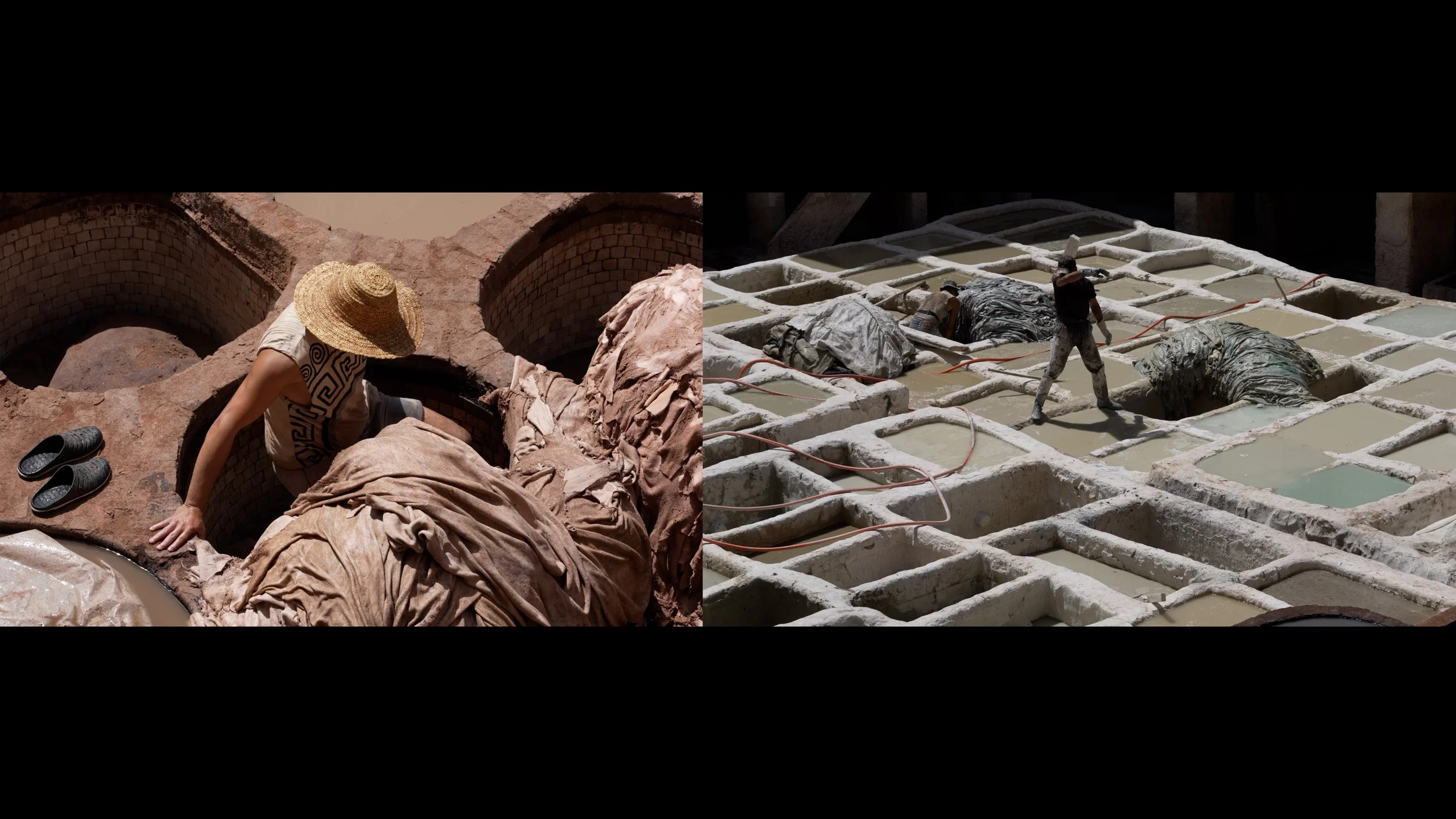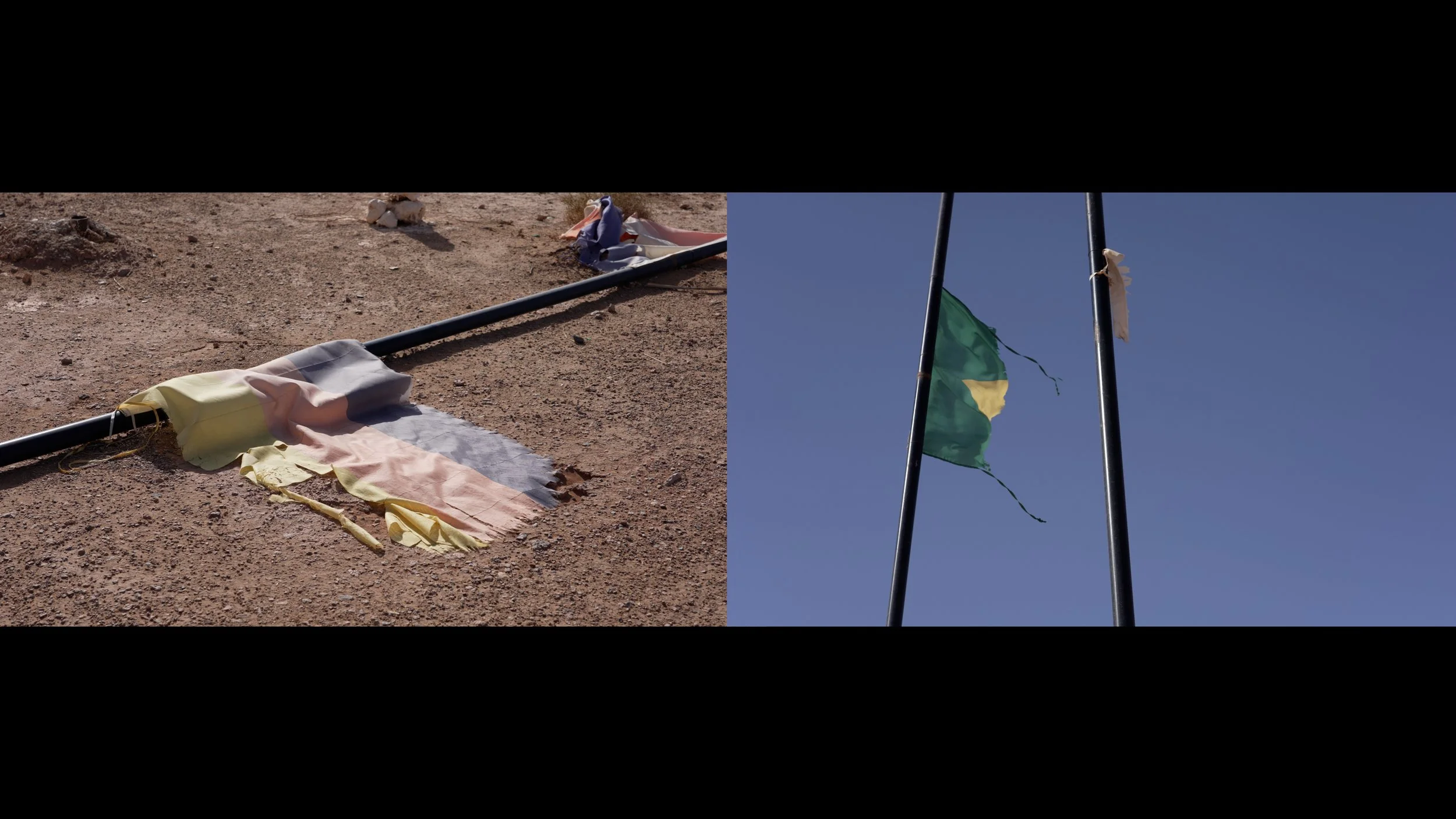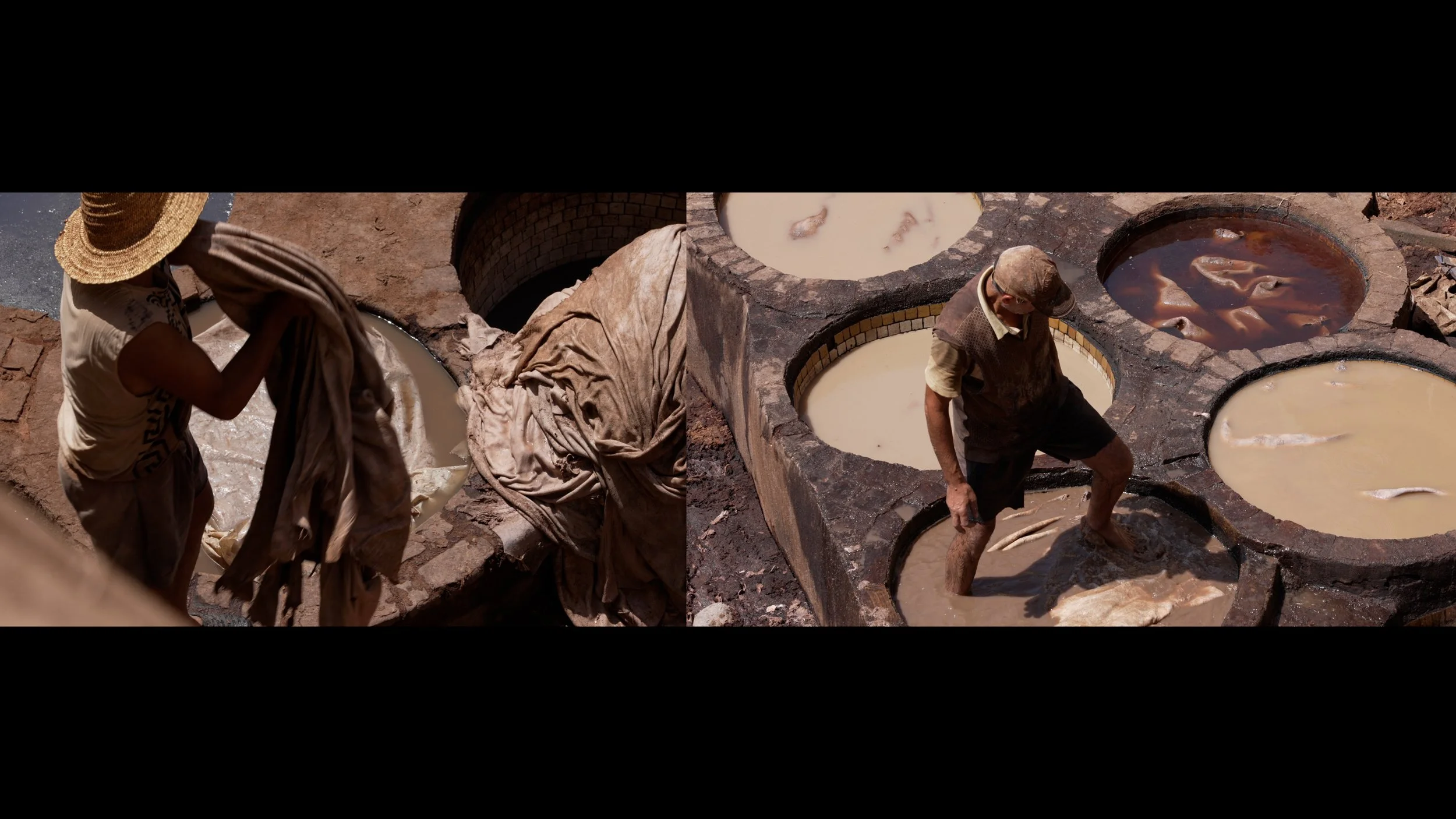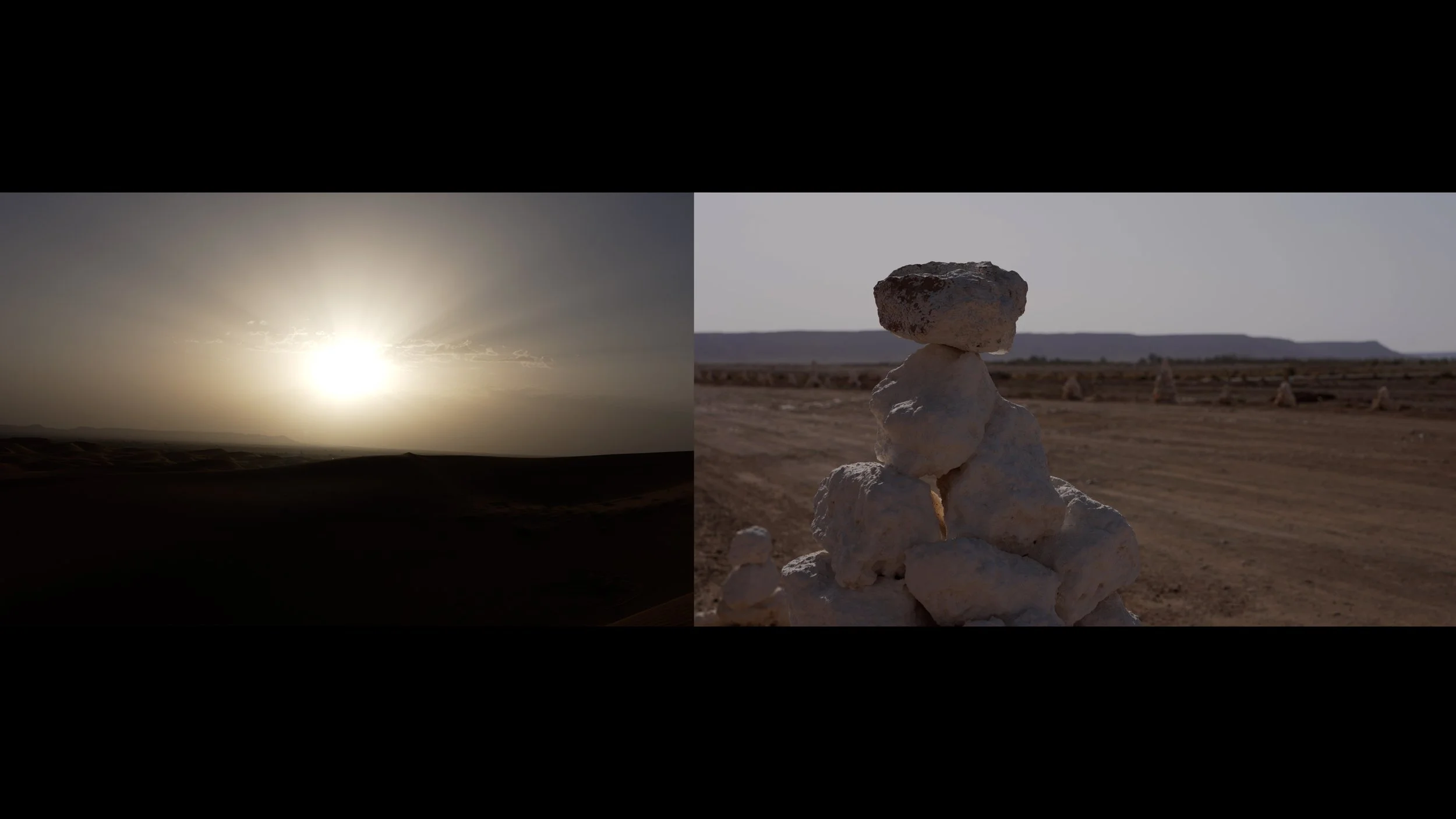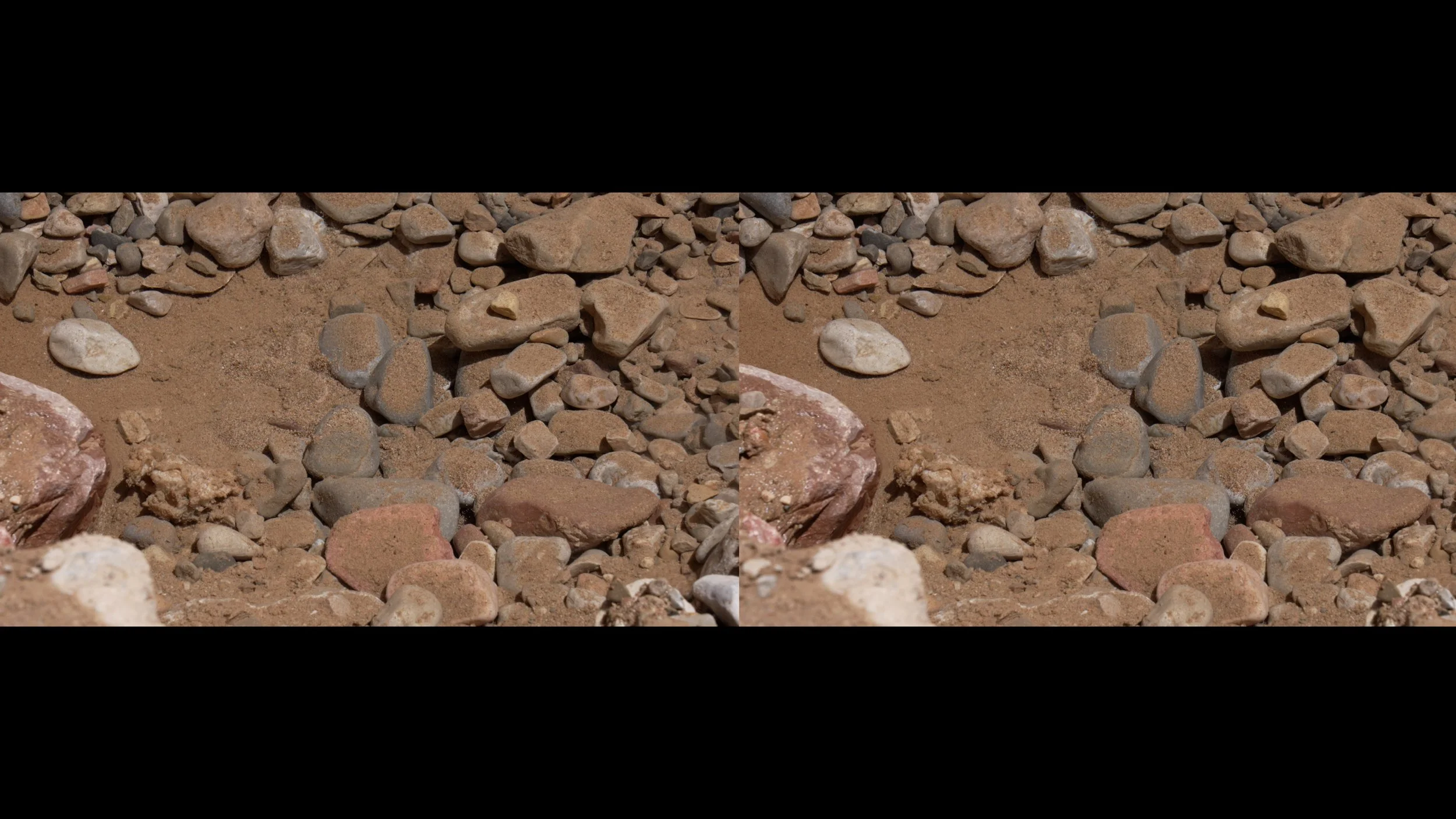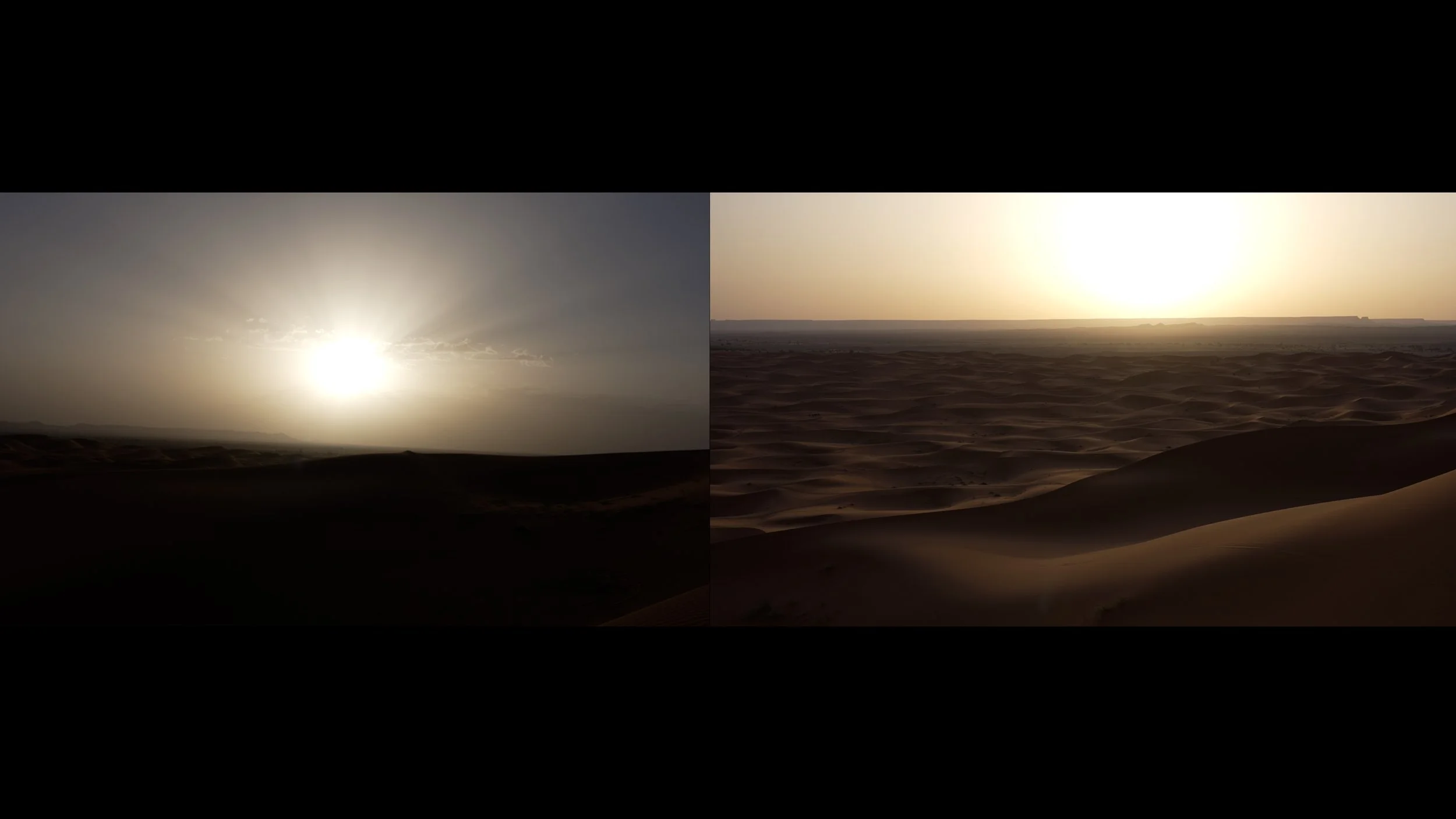
The work was filmed in the Western Sahara Desert, a site of natural heritage under former Spanish colonial rule, which remains in a state of geopolitical suspension to this day. The artist was granted permission to film local laborers for a fee of one dollar per person. Through video documentation of leather processing techniques—such as dyeing, kneading, and drying—the work constructs a mechanism of performative labor.
This mechanism is repeatedly reproduced in the context of contemporary global capitalism, where production activities in peripheral regions are exploited not only as commodity labor but also as visual labor. Leather, as a “second skin” of the animal body, reveals the trajectory of nature being disciplined by human intervention during its processes of removal, dyeing, and drying. Yet this process is more than a technical operation; it should be understood as a symbolic system of natural relations: nature is cut, classified, and objectified in order to be subsumed into the logic of commodity exchange.
The artistic documentation of this labor process is not a neutral act of recording, but rather the construction of a site for a performative economy. Under the dual gaze of the camera and the viewer, the physical labor of the artisans is gradually formatted into a “cultural scene” that is both visible and consumable—this is the core mechanism of the performative economy: labor serves not only material production but also the production of meaning.
Within this structure, the embodied labor of marginal regions is stripped of its sovereignty and, through visual systems, is once again appropriated—constituting an ongoing process of symbolic colonization.
Under the skin
2025 Dual-Screen Visuals
4K Colour /Sound/3 minutes